
Embarking on DIY electrical projects can be a truly fulfilling experience, not to mention the potential for significant cost savings. However, it’s of utmost importance to grasp the nature of the work and prioritize safety, knowing when to reach out to our professional team at Great Guys. We want to equip you with crucial information for your DIY projects, focusing on safety and the instances where professional assistance is indispensable.
Electrical Basics
Understanding Electrical Basics will help you in the long run when doing a project in your home or business. Here are some of the elements to be aware of when working on a project:
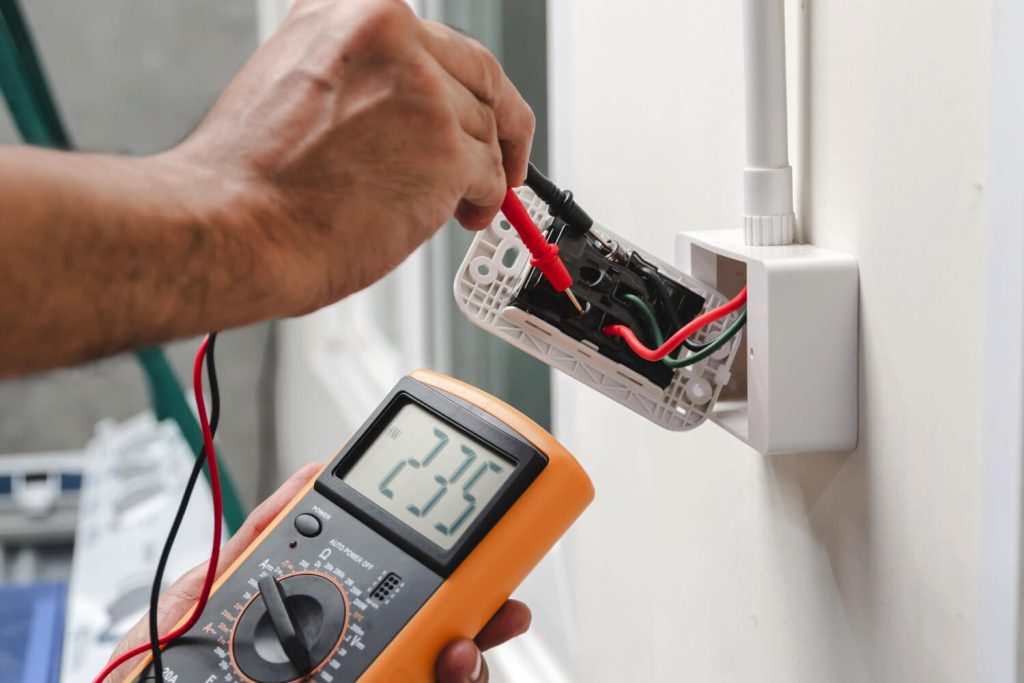
Voltage is the pressure that pushes electrical current through a circuit. Current is the flow of electrons, which helps flow electrical charges for anything in an outlet or circuit breakers. The higher the voltage, the more current will flow. Resistance is a measure of the opposition to current flow in an electrical circuit. Resistance is an important component in electronic circuits because it controls the flow of electric charge and ensures that current flows at the right level. Power is measured in watts (W), the rate at which electricity is used.
Circuit Breakers, Outlets, Wiring, and Switches are all potential components in any electrical repair. A circuit breaker is a device that stops the flow of an electrical circuit as a safety measure. Outlets connect all of our electrical devices (televisions, chargers, light stands, and other household appliances). We do not recommend replacing circuit breakers or wiring without the help of a professional.
DIY Electrical Projects

Light Fixture replacement is a common DIY project for homeowners, and of all the projects to take on, this is a safer place to start. First, you will need a new fixture of your choice, screwdriver, wire nuts, and voltage tester. The most important step is remembering to turn off the power. This minimizes the risk of getting electrocuted or starting a fire. Unscrew the old fixture and disconnect the wires. You will then need a voltage tester to ensure the wires are not live. Then, connect the new fixture and match the wires from the fixture to the wires in the ceiling, which are usually color-coded. The final step for this project is to attach the new fixture to the ceiling and restore power.
Another DIY Electrical Project at home can be replacing a light switch. This is pretty simple, but first things first, and this is the most important thing to remember: cut the power to it before making repairs. You will then unscrew the wall plate from the wall with a flathead screwdriver. Then, unscrew the switch from the junction box. Remove the wire nuts and test for power by touching the tester probes to either the wire and the metal box or to one wire and the ground wire. You must replace it with a new switch, restore power, and test it.
Childproofing homes when you have young children and baby-proofing areas are also very important when you have a family. Child light switch guards are available in various sizes. They are also clear and durable acrylics that easily blend with your house décor. These safeguards are helpful to stop your child from putting their fingers or objects inside the outlets. Childproofing your home gives your baby a safe place to play and explore while minimizing accidents from happening to them.
When to Call an Expert

While some electrical projects are manageable with basic skills and tools, some situations require the expertise of a licensed electrician. For example, some of the issues that need to be addressed by an electrician are panel upgrades, rewiring your home, and faulty wiring if water and electricity are involved. Burning smells or sparks indicate that you should call an electrician.
DIY electrical projects can be a satisfying way to improve your home, but safety must always come first. When understanding the basics and taking on the projects, it is when they recognize a call is needed for professional help.
Great Guys Colorado is here to support you and here to help when you need us.


0 Comments